
How 3M Security Window Film Supports Commercial Building Security

Commercial buildings rely on glass every day. Storefront windows, office entrances, reception areas, glass doors, ground-floor offices, and public-facing service areas all help create a professional, welcoming environment. But glass can also be one of the more vulnerable areas of a building.
For business owners, property managers, and facility managers, building security is not usually about one product or one solution. It is about understanding risk, protecting people, reducing vulnerability, and making practical upgrades that work with the building you already have.
That is where professionally installed 3M Safety & Security Window Filmcan play an important role.
Security window film is designed to help improve the performance of existing glass. When glass is impacted, the film helps hold broken glass fragments together, which can reduce risks associated with flying glass and may help delay entry. For commercial buildings, it can be a practical retrofit solution that supports safety and security without requiring full glass replacement in every situation.
At Windsor Window Imaging, we do not recommend choosing a security film based on product name alone. The right solution depends on the building, the glass, the frame system, the exposure, and the security goals. In some cases, the best recommendation may involve a specific 3M security film, an attachment system, or a combination of 3M window film solutions.
Why Exterior-Facing Glass Matters in Commercial Security
Many commercial buildings have exterior-facing glass in areas that are important to daily operations. These may include:
Front entrances
Storefront windows
Glass doors
Reception areas
Service counters
Ground-floor offices
Staff work areas
Public-facing windows
Display windows
Administrative or dispatch areas
These windows and doors are often part of the building’s design, visibility, customer experience, and natural light. Replacing them with heavier security glazing may not always be practical, cost-effective, or necessary for the building’s risk level.
Security window film offers a retrofit option for many existing exterior-facing windows. It helps improve glass fragment retention while maintaining the appearance of the building. For commercial properties that need added protection without changing the look of the space, this can be an important advantage.
Security Window Film Is One Part of a Layered Security Plan
A strong commercial security plan usually includes multiple layers. Depending on the building, this may include alarms, cameras, lighting, locks, access control, security procedures, staff training, and physical barriers. 3M Safety & Security Window Film can support this layered approach by addressing one specific vulnerability: glass.
If an exterior-facing window or door is impacted, untreated glass can break apart quickly. Security film helps hold glass fragments together, which can reduce the risk of flying glass and make it more difficult for someone to gain immediate access through the opening. It is important to be clear: security window film is not bulletproof, and it is not designed to stop intruders completely. Its value is in helping improve the performance of existing glass, supporting occupant safety, and potentially adding time during a break-and-entry attempt. In commercial security, time matters. Even a delay can support response procedures, alarms, staff action plans, or law enforcement response.
👉 Before choosing a film, it is important to understand your glass, frame system, exposure, business operations, and security goals. Contact Windsor Window Imaging to discuss your commercial building and get a professional recommendation and free estimate for your project.
Why the Right Commercial Solution Depends on the Building
Commercial security film is not one-size-fits-all.
The right recommendation depends on several factors, including:
The type of glass currently installed
The thickness and condition of the glass
The window or door frame system
Whether the glass is exterior-facing
The size and location of the windows
The level of public access
The building’s risk profile
The need for visibility, privacy, heat control, or branding
Whether an attachment system is recommended
How the building operates day to day
This is why a professional assessment matters.
For some commercial buildings, the priority may be break-and-entry delay. For others, the priority may be staff safety, glass fragment retention, vandalism reduction, privacy, UV protection, or a combination of concerns.
In some cases, a project may involve more than one type of 3M window film. For example, one area of a building may need added security, while another may need privacy, solar control, decorative film, or anti-graffiti protection.
The best solution starts with understanding the building first.
What Types of Commercial Buildings Can Benefit from Security Window Film?
Security window film may be considered for many types of commercial and public-facing buildings, including:
Office buildings
Retail storefronts
Banks and financial institutions
Schools and education facilities
Government and municipal buildings
Police stations and public safety buildings
Healthcare and professional offices
Warehouses and industrial facilities
Community centres
Places of worship
Commercial buildings with ground-floor glass exposure
Each industry has different security concerns. A retail storefront may be focused on smash-and-grab risk. A school may be focused on controlled access points and occupant safety. A government office may need to protect public-facing service areas. A professional office may need to improve safety without changing the look of the space.
This is why Windsor Window Imaging takes a consultative approach. Rather than recommending a product first, we look at the building, the glass, and the goals of the project.
Commercial Security Film Project Examples
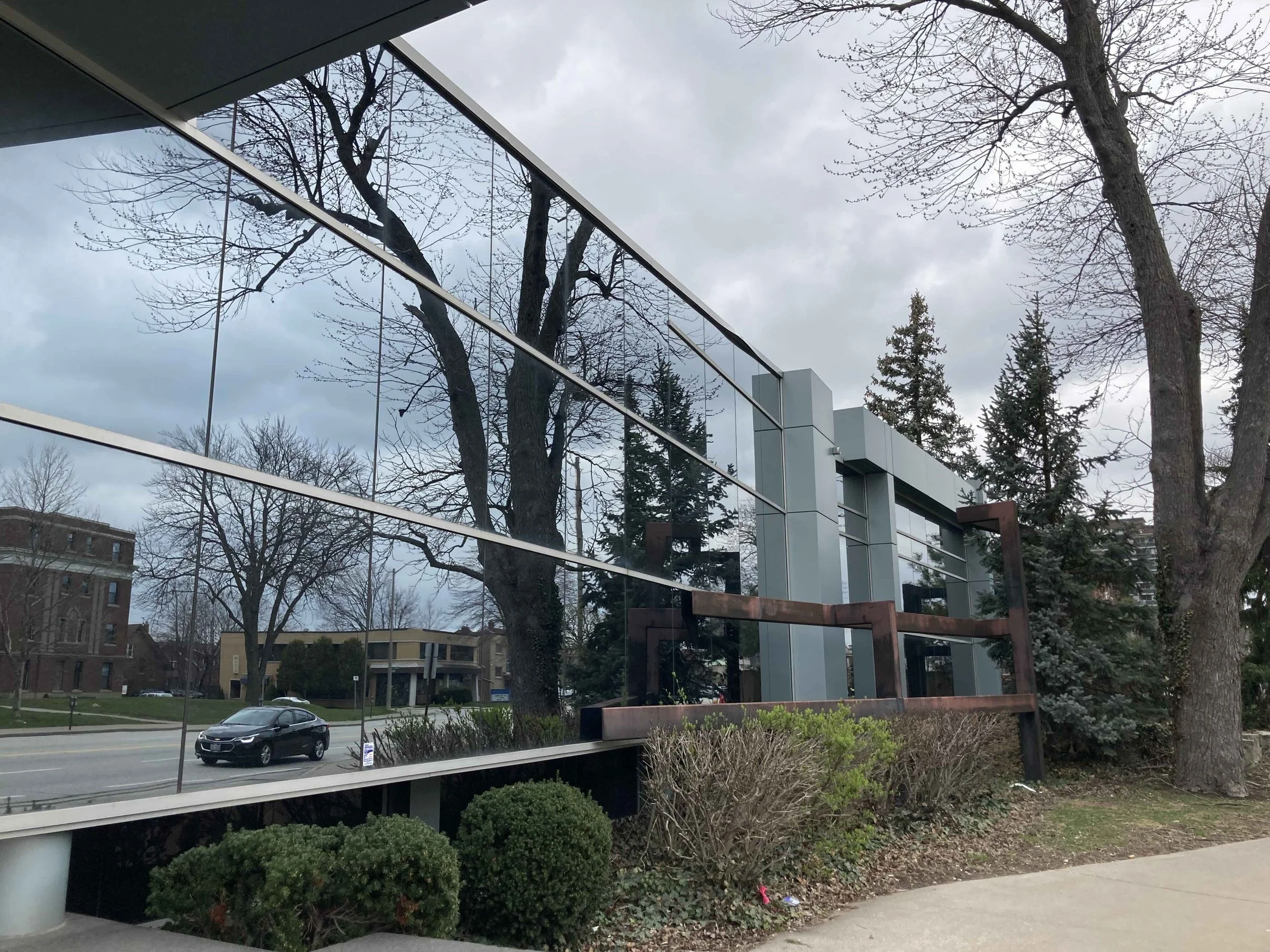
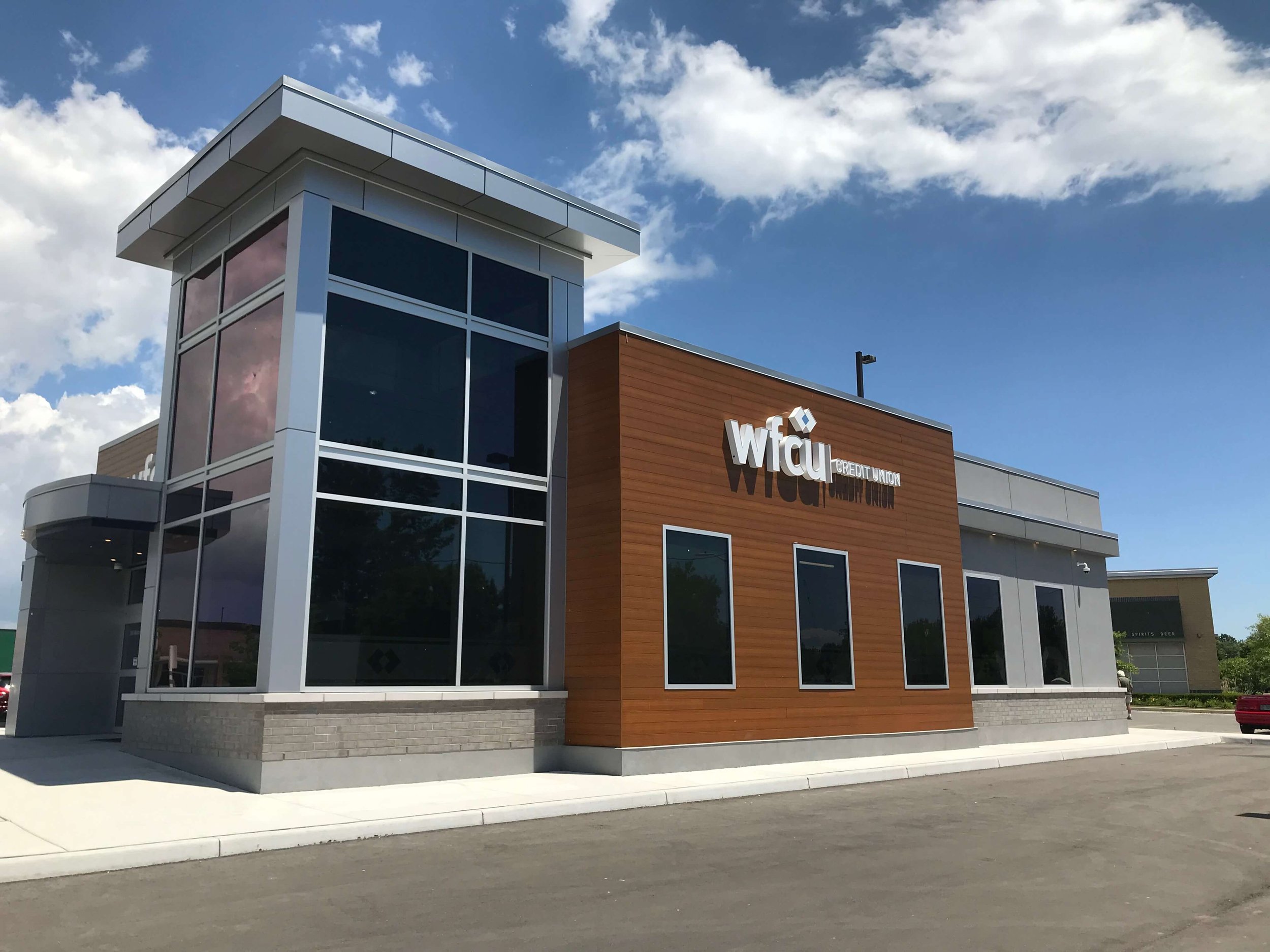
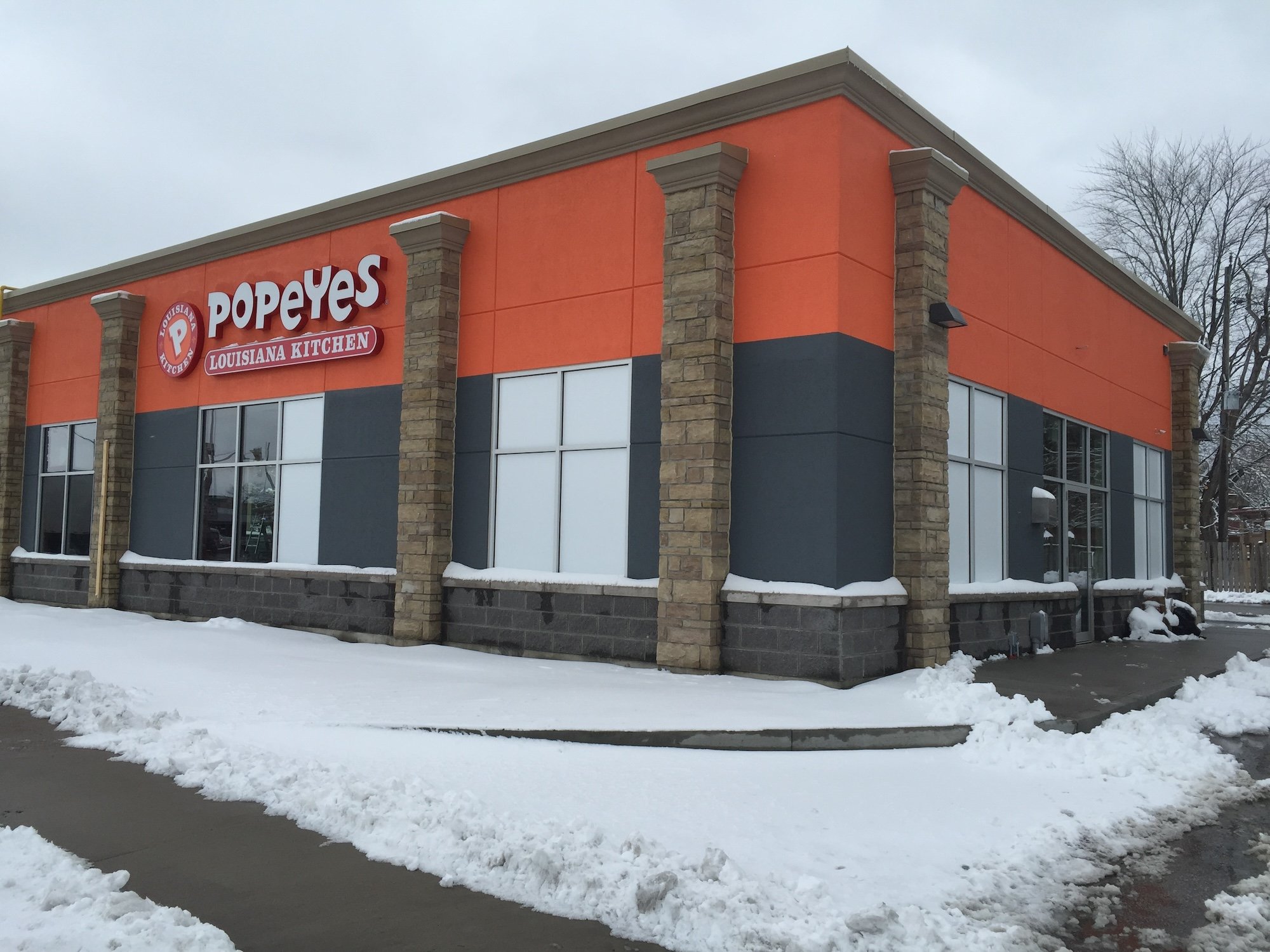
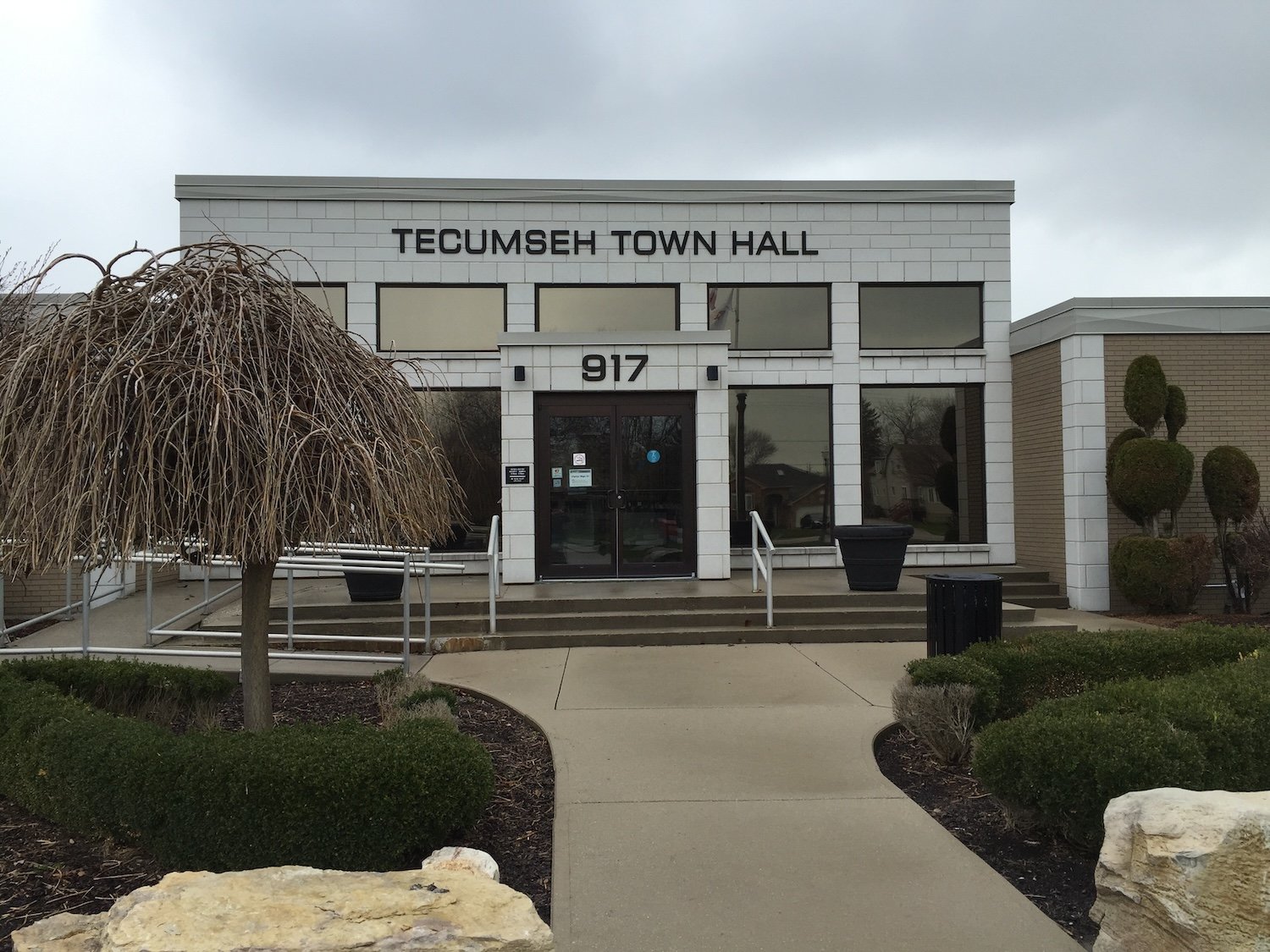
Every commercial building has different security needs, glass conditions, access points, and operational considerations. That is why Windsor Window Imaging takes a project-specific approach when recommending 3M security window film solutions. The examples below show how security film can be used in real commercial, institutional, and public-facing environments. These projects may include exterior-facing windows, office areas, dispatch or reception spaces, storefront glass, and other vulnerable glass areas where added protection was needed.
These case studies and project examples demonstrate how 3M security window film can be used as a practical retrofit solution to help improve glass fragment retention, support building security, and reduce disruption compared to full glass replacement.
Browse our commercial security window film project examples below to see how these solutions have been applied in different building environments across Windsor, Essex County, and Southern Ontario.

Installation Planning for Active Commercial Buildings
Many 3M security window films are installed on the interior side of exterior-facing windows and doors. This does not mean the film is only for interior glass walls or partitions. It means the film is applied from inside the building to the glass that faces the exterior.
For commercial buildings, this is an important planning detail.
Installation may need to be coordinated around:
Staff schedules
Customer access
Furniture and workstations
Reception areas
Display areas
Office operations
Security requirements
Weather and access conditions
Business hours or after-hours availability
A professional installation team will plan the work to minimize disruption while ensuring the film is installed properly. In many cases, security film can be installed without major interruption to normal business operations, but access and scheduling still need to be considered.
Why Work with a 3M Authorized Window Film Dealer
Security film performance depends on more than the film itself. Product selection, glass assessment, surface preparation, installation quality, trimming, attachment systems, and manufacturer guidelines all matter. Working with a 3M Authorized Window Film Dealer helps ensure the project is reviewed and installed by professionals who understand both the product and the application.
Windsor Window Imaging has been serving Windsor, Essex County, Chatham, Sarnia, and Southwestern Ontario since 1998. As a 3M Authorized Window Film Dealer, the team provides professional installation of solar, security, decorative, and specialty window films for residential, commercial, institutional, and public-facing buildings. Windsor Window Imaging is also a 7-time consecutive recipient of the 3M Dealer of the Year Award, recognized since 2019.
-
Yes. 3M security window film can often be installed as a retrofit solution on existing exterior-facing commercial windows, depending on the glass, frame system, and project goals.
-
Description text goes here