
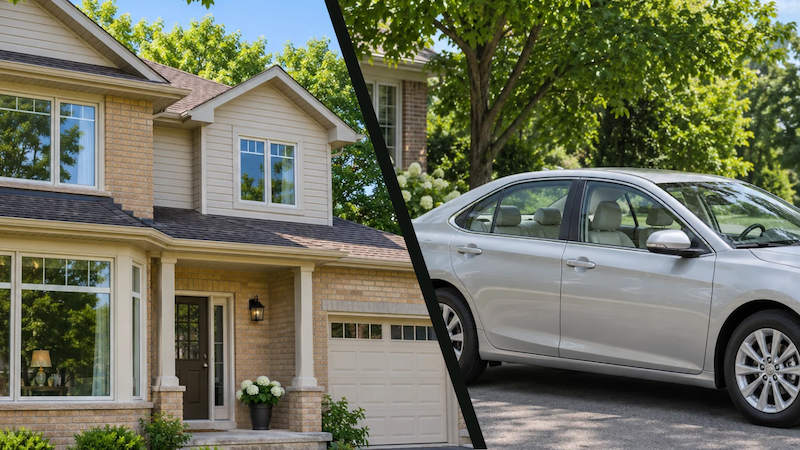
Window tinting serves a similar purpose in a car and a home: it helps make the space more comfortable. In a vehicle, film can reduce the heat and glare passengers experience through the windows. In a home or office, it can make a sunny room more comfortable to spend time in. Appearance, privacy and personal preferences can also influence the choice in either setting.
The main difference between car window tinting and home window tinting comes down to the glass, the film selected for it and the requirements of the application. What works on a vehicle should not simply be assumed to suit a house window.
Similar goals and different glass
Automotive glass is designed as part of a vehicle’s safety system. Many side and rear windows use tempered glass, which is heat treated to change its strength and how it breaks. Windshields use laminated glass, with an interlayer that helps hold the glass together when broken. Some side windows are laminated too. Vehicle windows are often curved, and automotive film is commonly heat shaped to fit those contours.
Windows in homes and buildings are usually flat, which is why the industry refers to this work as flat glass window film installation. Building glass can also be tempered or laminated, but the complete window assembly brings different considerations. A house window may have two or three panes, sealed spaces between them and coatings designed to manage heat.
Those differences matter when choosing film. For a home, an installer considers the glass construction, existing coatings, sun exposure and shading before recommending a compatible product. The film changes how the glass handles solar energy, so a suitable film and glass combination is an important part of the installation. Similar-looking films are not automatically interchangeable between vehicles and buildings.
Choosing the shade and appearance
Cars show how much the appearance of window tint can vary. Some owners prefer a subtle finish; others like a darker look. Film is available with different levels of visible light transmission, which describes how much visible light passes through. Lower transmission generally creates a darker appearance.
For a vehicle, that preference must also work within the applicable visibility rules. Restrictions can affect which windows may be tinted and how much visibility must be maintained, particularly around the driver. An automotive installer should understand the requirements that apply to the vehicle and location, as well as the look and comfort the owner wants.
Homeowners have their own balance to consider. Someone might want less glare in a bright family room, while another person wants to preserve as much daylight as possible. The appearance from inside and outside matters too. 3M™ Sun Control Window Film offers different options for managing heat, glare and natural light, so the conversation involves both performance and personal preference. A darker appearance is not the only way to reduce solar heat.
Reflective and non reflective window films
Another difference is reflectivity, or how mirror-like the glass appears. Many residential and commercial solar control films have a reflective finish, while automotive films generally have a non-reflective appearance. This is separate from tint darkness: a dark window does not necessarily have a highly reflective surface.
Reflective films for buildings help manage solar heat and glare by reflecting a portion of the incoming sunlight. The level of reflection varies by product and can differ between the inside and outside surfaces. Some films combine higher exterior reflectivity with lower interior reflectivity to help maintain the view out.
However, home window film does not have to create a mirrored look. Options such as 3M™ Prestige Series offer solar heat control with low visible-light reflectivity on both sides of the glass. The right choice depends on your windows, the comfort you want and how you would like the glass to look from inside and outside.
Both applications take installation skill
If you have noticed a car with creased film, peeling edges or lasting bubbles, you have seen how much the finish matters. A flat house window may look simpler to work on than a curved car window, but achieving a clean installation across a large pane also takes skill.
Both applications involve careful glass preparation, accurate fitting and controlled application. An automotive installer works with curves, window edges and vehicle fittings. A flat glass installer works with the building’s glazing, pane sizes and access conditions. In either case, the installer needs to understand the film and how it should be applied.
Some moisture or haziness can be normal while newly installed film cures, so an early water pocket does not automatically mean the work is faulty. A professional should explain what to expect, how to care for the film and when to ask for a follow-up inspection.
Whether you are tinting a car or improving the windows in your home, choose a professional with experience in that particular application. The aim is a suitable film, the appearance you want and a properly completed installation.
Related Article: Why Choose a Professional for your Window Film Installation
With 28 years in business, Windsor Window Imaging specializes in 3M window film for homes, offices and other buildings. As a 3M Authorized Window Film Canada Dealer, the company has earned the Dealer of the Year Award from Window Film Canada for seven consecutive years. Learn more about Windsor Window Imaging >
Our focus is flat glass window film; we do not tint vehicles. Rusty and the team can help you choose the right film for your glass, your preferences and the way you use your space. Tell us what you would like to improve.